

If your home always seems to feel colder than it should, despite turning up the heating, your loft insulation could be part of the problem.
Heat naturally rises, and without effective insulation between your living space and roof, a significant amount of that warmth can escape into the loft and eventually outside. The result is a home that is harder to keep warm, heating that needs to work for longer, and energy bills that can be higher than necessary.
According to the Energy Saving Trust, an uninsulated home can lose around 25% of its heat through the roof, making loft and roof insulation one of the most effective ways to reduce heat loss.
But poor loft insulation isn’t just about energy bills. It can also affect comfort, condensation, the temperature of your home and, in some circumstances, the condition of the loft itself.
Here’s what you need to know.
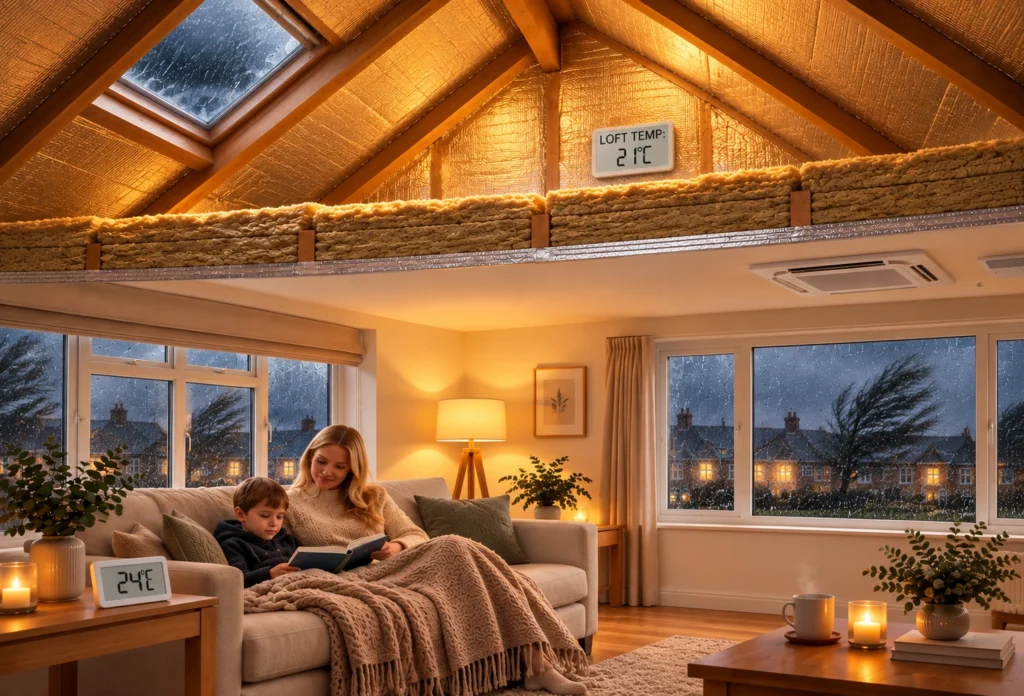
Your roof is one of the largest areas through which heat can leave your home.
When your heating system warms the air inside your property, that warm air rises. Without sufficient insulation, heat can pass through the ceiling and into the loft space.
During winter, this can create a cycle:
Heating on → heat rises → heat escapes through the loft → home cools down → heating comes back on.
The more heat your home loses, the harder your heating system has to work to maintain a comfortable temperature.
Loft insulation creates a thermal barrier that slows this process down, helping your home retain more of the heat you’ve already paid to generate.
You don’t necessarily need specialist equipment to notice that your loft insulation may need attention.
Some common warning signs include:
1. Your upstairs rooms feel cold
If bedrooms and other rooms directly beneath the loft consistently feel chilly, particularly during winter, inadequate insulation could be contributing to the problem.
2. Your heating seems to run constantly
If your heating system needs to work harder or for longer periods to maintain the temperature you want, excessive heat loss could be one of the factors involved.
3. Your loft has very little insulation
Older properties can have insulation that is significantly thinner than modern recommendations.
The Energy Saving Trust currently states that 270mm is the recommended minimum depth for mineral wool insulation in a typical loft.
However, insulation requirements aren’t simply about putting down as much material as possible. The appropriate solution depends on your property, roof construction, existing insulation, ventilation and how the loft is being used.
4. You notice condensation or damp problems
A cold loft environment combined with inadequate ventilation can contribute to condensation problems.
Importantly, insulation should not simply be installed over an existing damp problem. The condition of the loft needs to be assessed first.
5. Your home feels difficult to heat evenly
Rooms may become noticeably colder once the heating switches off, or you may find that certain areas of the property are consistently harder to keep comfortable.
If your loft has old, thin or deteriorated insulation, upgrading it can improve the thermal performance of your home.
The Energy Saving Trust explains that increasing existing insulation from around 120mm to 270mm can help reduce heat loss and energy use.
The potential benefit varies considerably depending on the property, its construction, heating system, energy usage and the condition of the existing insulation.
That’s why it’s important not to rely on generic savings figures.
A professional assessment can establish what is currently in your loft and whether upgrading the insulation is likely to be worthwhile.
One of the biggest misconceptions about loft insulation is that the best solution is always simply to add more material.
That’s not necessarily the case.
Different properties have different requirements. A traditional loft used primarily for storage has different considerations from a loft conversion, roof room or awkwardly shaped roof space.
Ventilation also matters.
Your roof needs appropriate ventilation to help manage moisture and reduce the risk of condensation. Insulation should therefore be installed as part of a properly considered system rather than simply packed into every available space.
The Energy Saving Trust recommends seeking professional advice where there are concerns about damp, structural issues, flat roofs or living spaces within the roof.
Traditional mineral wool remains a common loft insulation solution, but it isn’t the only option.
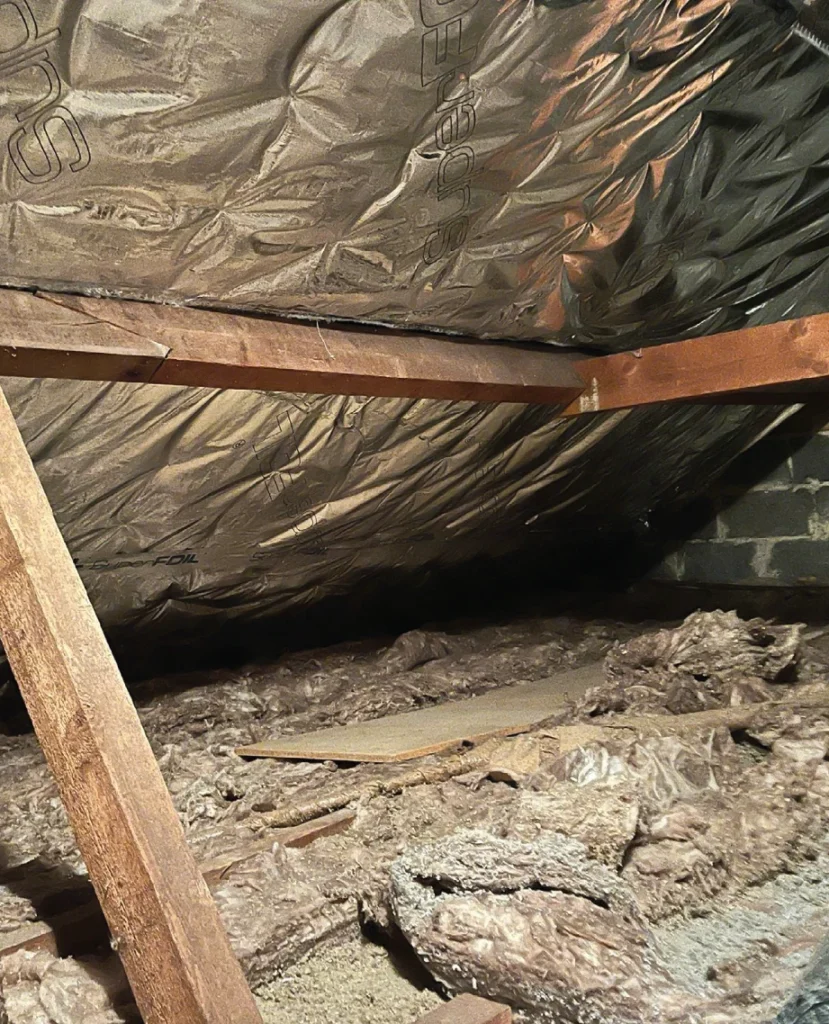
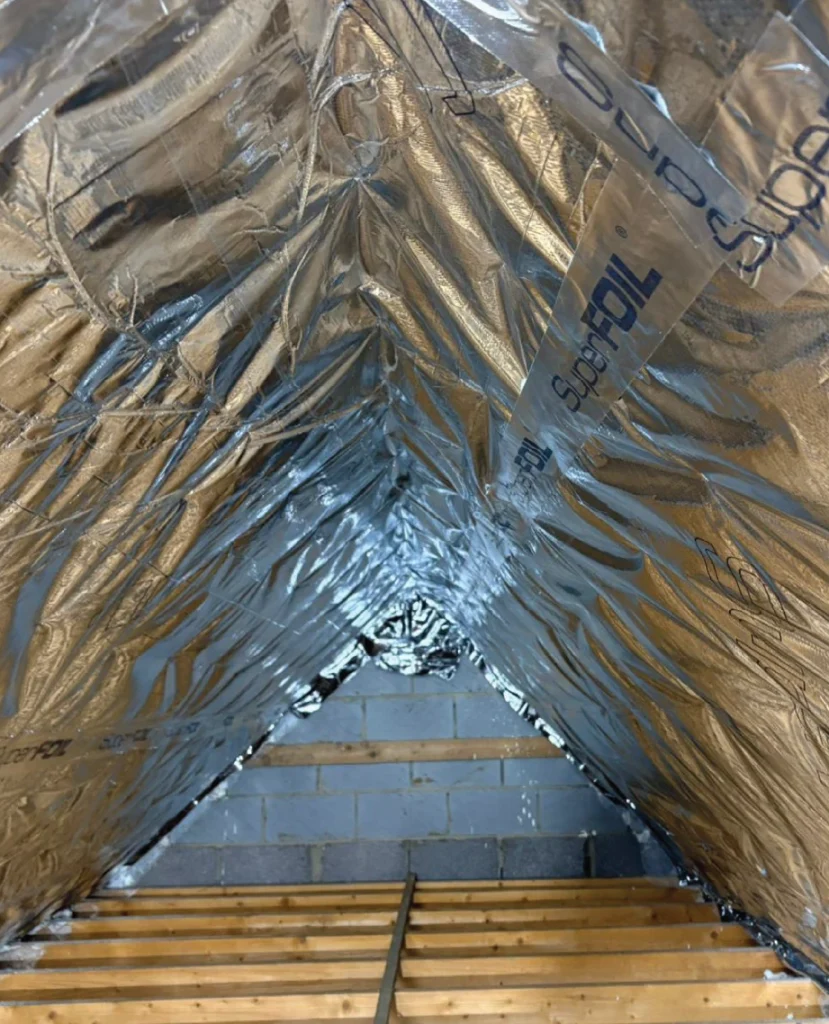
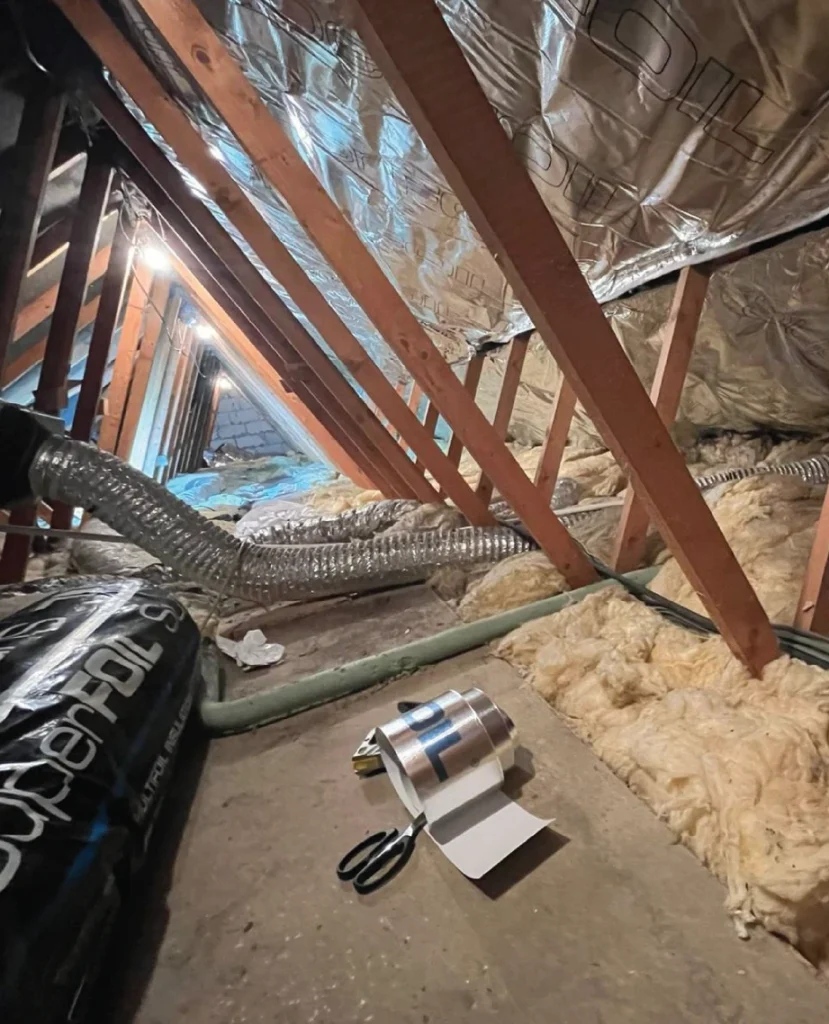
Multifoil insulation uses multiple layers and reflective surfaces to reduce heat transfer. Products such as SuperFOIL can be particularly useful in situations where space is limited or where a thinner insulation system is desirable.
The Loft Insulation Experts are certified installers of SuperFOIL and use it across a range of domestic insulation projects.
Multifoil systems do require correct installation, including appropriate air gaps where specified by the manufacturer. This is important because the performance of reflective insulation depends on the system being installed correctly.
For homeowners, the key question isn’t necessarily “Which insulation is the best?”
It’s:
“Which insulation system is appropriate for my property?”
That is where a professional survey can make a difference.
The financial cost of heat loss is only part of the picture.
A poorly insulated home can feel less comfortable throughout the year.
In winter, heat escapes more easily. In summer, the temperature of the roof space can also influence the conditions below.
Improving insulation can help create a more stable indoor environment by reducing the rate at which heat moves between your living space and the roof.
The Energy Saving Trust also notes that loft insulation can help make homes more energy efficient and can form part of wider improvements when preparing a property for lower-carbon heating systems.
Older properties are particularly worth investigating because insulation standards and construction methods have changed significantly over the years.
You may find that a loft contains:
Simply looking into the loft isn’t always enough to determine whether an upgrade is appropriate.
A professional inspection can identify the existing insulation, assess the condition of the loft and establish what improvements may be suitable.
This is one of the most common questions homeowners ask.
The honest answer is: it depends.
The potential savings from loft insulation vary according to factors including:
The size and type of your property
How much insulation you already have
The type of insulation installed
Your heating system
Your energy usage
Current energy prices
The condition of the roof and loft
For this reason, it’s better to treat online savings calculators and headline figures as estimates rather than guarantees.
The Energy Saving Trust publishes indicative costs and savings for different levels of loft insulation, but also makes clear that costs depend on the property and the amount of insulation being installed.
A survey of your actual loft gives you a much more useful starting point.
Loft insulation may appear straightforward, but there are several details that can affect its performance.
Professional installation can help ensure that:
The appropriate insulation system is selected
Existing problems are identified
Ventilation is considered
Insulation is installed correctly
Difficult areas aren’t overlooked
The loft remains suitable for its intended use
The finished installation performs as intended
At The Loft Insulation Experts, the process starts with a consultation and assessment of your loft before recommending an insulation solution. The company provides professional loft insulation installation and operates across multiple UK regions.
If your home feels colder than it should, your heating bills seem unnecessarily high, or your loft has old or inadequate insulation, it could be worth having it professionally assessed.
Loft insulation is a relatively straightforward home improvement, but choosing the right system and installing it correctly are important if you want to get the best possible result.
Whether your property needs additional insulation, a complete upgrade or a more specialised solution, the first step is understanding what’s already there.
The Loft Insulation Experts can assess your loft and recommend an insulation solution suited to your property.
Get a free loft insulation quote from The Loft Insulation Experts
Call 0800 047 2404 or request a free survey to find out how your loft could be improved.
Don’t let valuable heat escape through your roof. A properly insulated loft can help your home stay warmer, more comfortable and more energy efficient.
Find out if your loft could benefit from an insulation upgrade.
Book Your FREE Loft Insulation Survey Today
Call 0800 047 2404
No-obligation advice. Professional installation. A warmer, more efficient home.